
 info@pariisiresort.ee


History of Pariisi village
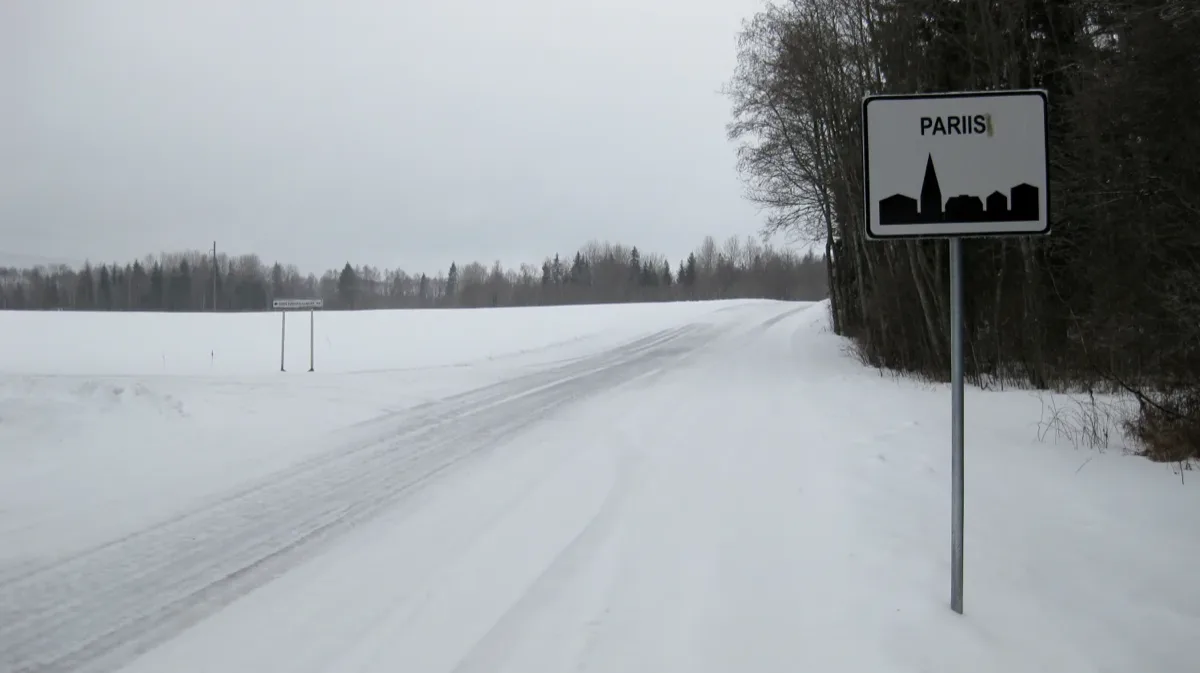
In the south-western corner of Kadrina municipality in Lääne-Virumaa, more than ten kilometres from the church, lies a tiny village whose name always raises a smile. Paris, yes, just like that Paris. But behind the name is a story reaching back to the second half of the 19th century.
Birth of the village
The history of Pariisi village begins in 1870-1875, when the lord of Saksi manor, Breoern, and the squire of Jõepere gathered the manor and farm servants living on the lands of Kiku and Aruküla into one place along the Saksi-Jõepere road. Thus was born the village we know today as Pariisi.
In its early years, Pariisi counted 36 sauna houses with 80 residents. The village was surprisingly lively and diverse, among its inhabitants were several craftsmen:
- Carpenters
- Cobblers
- Tailors
- Stove builders
- Even a businessman
Where does the name 'Paris' come from?
Pariisi sits on several hills, just like its famous French namesake. Legend has it that the lord of Saksi manor, looking at the village streets, said they reminded him of the boulevards of Paris. And so the unusual name stuck.
It is now a merged triple village located in the Neeruti landscape reserve. As a legacy of the Ice Age, eskers and hills rise here, and ski and hiking trails winding through the forests are known across Estonia.
Neeruti landscape reserveThe schoolhouse and village life
Around 1910, a schoolhouse built with money raised by local farmers was opened on the border of Aruküla and Kiku. It was the community's pride and the heart of local education. Today the building is used as a dwelling.
The village declined rapidly during the collective farm era. Where once 80 people lived, today only four households remain. There is no shop in the village, and connections to Rakvere and Tapa are maintained by bus.
Birth of the resort
The Pariisi Resort-Camp has a fascinating history of its own. In the 19th century, the lord of Saksi manor established a brick factory at the foot of Emumägi, hence the local place name Sara. Clay was sourced from beside the factory, but around 1910 it had to be brought from the Sulusoo bog behind Pariisi village, amid the fields of Aruküla.
Post-war hardships did not leave the people of Pariisi untouched either. After the collective farm era, the farmer's wife who had returned to her family homestead sold the farm buildings in 1971 to the VSÜ 'Jõud' Central Council for establishing a sports base.
Within a few years, the energetic local leader Arvo Aam and sports committee chairman Vello Õuekallas built a 100-person sports base. Ski trails meeting competition standards were constructed on the slopes of Emumägi and remain in use to this day.
Sport and the Tamsalu-Neeruti marathon
The Pariisi area has been a venue for sporting events for decades. From 1971 to 1987, the Tamsalu-Neeruti ski marathon was held here, originally as a team competition. The marathon has since been revived and attracts hundreds of athletes to the Neeruti forests every year.
As the resort developed, other sports and leisure opportunities were added. The largest riding arena in Lääne-Virumaa was built in the village, a disc golf course and children's playground were created. In winter the village became a ski paradise, where one had to book accommodation well in advance.
Neeruti marathonLiterature and village gatherings
Pariisi village was made famous by the writer Raimond Kaugver with his novel 'The Merry Women of Paris'. The book was inspired by the life and people of this very place, although most of the novel's prototypes have since passed on.
The community spirit lives on. On St. Lawrence's Day, 10 August 2002, the first Pariisi village reunion was held, attended by about a hundred former and current village residents from across Estonia. Local historian Eduard Leppik and Enn Loik from the Neeruti Society gave topical presentations, dance music played, and a colourful photo exhibition was on display. A bouquet of beautiful summer flowers was presented to the village's oldest resident, 80-year-old Meeri Tank.
Pariisi Resort today
A new chapter for the resort began in 1991. Over the decades, the base was maintained and gradually developed, and Pariisi Resort regained its reputation as a favourite destination for nature hikers in northern Pandivere. Summer brought youth camps and various gatherings; in winter the village turned into a ski paradise.
The resort's development was accompanied by the fireworks company Pariisi Tuled, which lit up Estonian skies for nearly three decades. Every New Year's Eve at 6 pm on Pikk Street in Rakvere, a grand salute became a tradition, the shared start of the New Year for friends and families.
Since 2026, Pariisi Resort is managed by Pariisi Resort OÜ, with the same values that have drawn people here for half a century: active recreation in the heart of nature, sporting events and a warm community spirit.